Barbara Neves Alves appointed Head of next Temporary Department Sandberg
Sandberg Instituut is delighted to announce Barbara Neves Alves as the Head of the forthcoming Temporary Department, Archives, Otherwise: Making the Errata, starting in September 2027.
Born in Porto and based in Amsterdam, Barbara Neves Alves is a practice-led researcher and educator. In her work, she moves between language, materials, histories, and relations, often with museums, monuments, and archives. Her longstanding research into miscommunication, translation, and cultural heritage grounds her sustained questioning of how knowledge is materially produced, organised, and given authority.
She is interested in the conditions that make collective thinking possible, in the ethics of proximity, and in how editorial practices create spaces for different positions to remain in dialogue without being resolved into agreement. Through material, performative, and collective approaches, she works to unsettle dominant narratives, shift established meanings, and explore different forms of knowledge in relation. These approaches interweave with her work as an educator, where she explores situated and collective ways of learning as sites of questioning and speculation.
Her recent work includes Moving Labels — Shifting Narratives, developed with Framer Framed and Wereldmuseum Amsterdam, and Disquietudes, developed through conversations and material experimentation with vernacular ceramic traditions in Portugal. Barbara holds a practice-led PhD from Goldsmiths, University of London, and teaches at the Gerrit Rietveld Academie, Amsterdam and the KABK, The Hague. Over the next month Barbara will begin her work at Sandberg Instituut, building on her extensive proposal to complete the full curriculum for Archives, Otherwise which will run from 2027–2029.
The Temporary Department Archives, Otherwise will be a two-year exploration of the archive as a site of practice-led research, collective learning and editorial experimentation. An errata sheet is a minor editorial form that sits beside a printed text, leaving the original in view while opening it to other readings. Taking up this gesture, the department proposes a gap or interstice alongside the archive: a space for questioning where meanings and relations can shift, and other possibilities for knowing, narrating, making, and relating can emerge.
Archives, Otherwise begins with an encounter: an object, a label, an image, or a story, considering the questions it opens up around how histories are held and given authority. Each of these can be followed outward into a wider ecology: who made it, through whose labour and trade, under what description, with what omissions? Around every archive gathers an anarchive: gestures, memories, relations and forms of knowledge that exceed what can be documented or classified. These situated and relational forms of knowledge, alongside the institution itself: its classifications, material histories, affects, and absences become both part of the inquiry and an invitation to experiment.
Central to the programme is an ethics of collective encounter. Archives, Otherwise will create space to explore what becomes possible when individual inquiries are brought into proximity, and the responsibilities that arise when different histories, positions, and experiences meet. Moving between forms of knowledge, materials, and methods, the cohort will work through different ways of holding, questioning, and circulating memory, from colonial collections, community-built archives, and moving-image histories to curatorial, material, and embodied practices.
Through shared reading, material experimentation, conversations, meals, and a publication-in-process, Archives, Otherwise will support the development of an expanded collective editorial practice of annotating, relating, and gathering traces of different materials, voices, and positions. Within it, individual inquiries retain their distinctiveness while remaining in dialogue with and responsive to one another. Through these different modes and methods, the cohort will also investigate how an educational institution learns, teaches, remembers, and makes public.
A full course description of the Temporary Department Archives, Otherwise will be published soon. Applications to join the cohort open in January 2027. For updates, keep an eye on sandberg.nl/apply-now
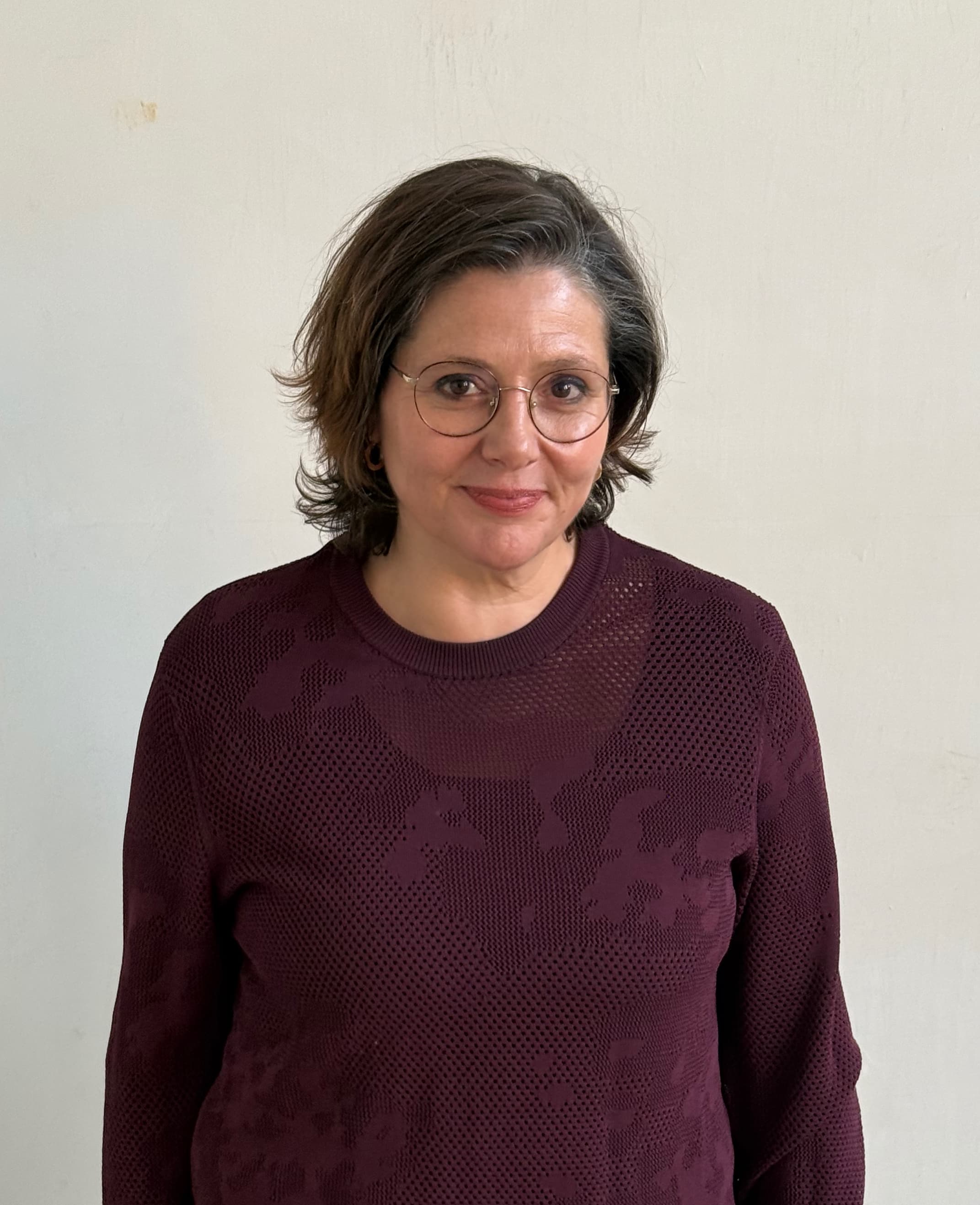
Portrait of Barbara Neves Alves